
Singapore's subsoil drainage specialist | HDPE perforated pipe & geotextile-wrapped systems | 25-40 year design life | In-house team — no subcontracting
Why Singapore Gardens Flood (And Why Surface Drains Don’t Fix It)
Singapore receives an average of 2,300mm of rainfall a year. Monsoon storms deliver 30 to 80mm in a single hour. Our clay-heavy tropical soils cannot absorb water fast enough — and when builders compact the subsoil during construction, what’s left is essentially a bathtub waiting to fill.
2,300mm
Average annual rainfall in Singapore
30-80mm
Per hour during monsoon storms
155
Rainy days per year on average
2 mo
Northeast Monsoon (Nov–Jan) intensity
Signs Your Garden Has a Ponding Problem
If you recognise three or more of these, your garden has a subsoil drainage issue — not just a surface drainage one.
⚠ Standing water 24+ hours after rain
Puddles remain visible the day after a monsoon storm. Surface water should drain within a few hours on a healthy garden.
⚠ Lawn squelches when you walk on it
The grass surface feels spongy and water seeps up under your shoes 2+ days after rain. The soil is saturated below the surface.
⚠ Yellow patches in the lawn
Patches of grass dying or turning yellow even though it’s been raining. Waterlogged roots can’t access oxygen — they suffocate and die.
⚠ Plants dying despite watering
Shrubs and ornamental plants wilt and die. Counter-intuitive but true — too much water suffocates roots the same way too little does.
⚠ Moss growing in the lawn
Patches of moss appearing where grass used to grow. Moss thrives in waterlogged, low-oxygen conditions.
⚠ Damp smell or mosquitoes
Persistent damp musty smell in the garden, or mosquito breeding spots. Both signal stagnant water sitting too long.
⚠ Water flowing toward the house
During heavy rain, you see water running toward the building instead of away. Could be poor grading, blocked drainage, or both.
⚠ Surface drains overflowing
Existing trench drains and gulleys overflow during heavy rain. Often a sign the underlying drainage system is overwhelmed.
⚠ Algae or mold on paving
Paving, brickwork or driveway showing green algae or black mold. Indicates chronic wetness from groundwater.
How Subsoil Drainage Pipes Solve Garden Ponding
A subsoil drainage pipe is buried 30 to 60 cm below ground level, wrapped in geotextile fabric and bedded in gravel. Here’s how the system works.
The Four Components
1. Perforated HDPE Pipe
The core of the system — a high-density polyethylene pipe with small holes along its length. Water enters through the perforations and flows by gravity to the discharge point. We use 100mm diameter pipe as standard, 150mm or 200mm for larger systems.
2. Geotextile Fabric Wrap
A non-woven permeable fabric that wraps either the pipe directly or lines the entire trench. It lets water pass through but filters out soil particles that would otherwise clog the pipe perforations. Skipping the geotextile is the #1 cause of premature failure.
3. Gravel Bedding
Washed crushed stone (typically 20 to 40 mm grade) surrounds the pipe in the trench. Gravel creates void spaces for water to collect and flow toward the pipe perforations. It also stabilises the trench and protects the pipe from soil pressure.
4. Discharge Connection
The downstream end of the pipe connects to your existing storm drain, perimeter drain, soakaway pit or PUB road drain. Connections need proper falls (1:100 minimum) to ensure gravity flow. We design the discharge carefully — a system that can’t discharge can’t work.
Subsoil Drainage vs Other Solutions
Garden ponding is often “solved” with the wrong fix. Here’s how subsoil drainage compares to the alternatives.
| Solution | What It Does | Best For | Lifespan | Typical Cost |
|---|---|---|---|---|
| Subsoil Drainage Pipe (our specialty) | Removes groundwater from saturated soil below the surface | Persistent waterlogging, clay soils, gardens that stay wet for days | 25–40 years | $1,200–$12,000 |
| French Drain | Subset of subsoil drainage — gravel trench with perforated pipe | Localised wet spots, perimeter drainage | 20–30 years | $800–$5,000 |
| Surface Trench Drain | Channels surface water along driveways or paths | Surface runoff only, not soil saturation | 15–25 years | $500–$3,000 |
| Garden Regrading | Slopes ground to direct surface water away | Minor surface ponding, gentle slopes | Permanent if done right | $1,500–$8,000 |
| Soakaway Pit | Underground chamber that absorbs and slowly disperses water | Sites with no discharge point | 15–25 years | $1,500–$6,000 |
| Permeable Paving | Allows water to soak through hard surfaces | Driveways, paths over sandy soils | 20+ years | $30–$80 psf |
| Bio-Retention / Rain Garden | Plants absorb and clean runoff naturally | Eco-friendly approach for moderate water | 10–20 years with maintenance | $3,000–$15,000 |
Subsoil Drainage Pricing in Singapore
Real ranges, not “starting from” placeholders. Final price depends on garden size, pipe length needed, soil conditions, depth required, discharge complexity and site access.
What’s Included
- Free on-site assessment and diagnosis
- Trench excavation to depth and grade
- Perforated HDPE pipe supply & installation
- Non-woven geotextile fabric wrap
- Washed crushed stone gravel bedding
- Connection to existing storm drain
- Backfill and turf reinstatement
- Site cleanup and waste disposal
- 2-year workmanship warranty
Quoted Separately (Optional)
- Garden regrading and contour work — quoted
- Soakaway pit installation — $1,500–$6,000
- New PUB drain connection (if required) — quoted
- Full re-turfing after work — see grass planting service
- Plant relocation and replanting — quoted
- Inspection chambers for large systems — $300–$800 each
- Tree root protection during excavation — quoted
Our Subsoil Drainage Installation Process
From first call to flowing pipe. Every step matters — and we don’t skip any.
1. Free On-Site Diagnosis
We visit during or right after rain wherever possible (it’s much easier to diagnose with water visible). We map ponding zones, test soil permeability, check existing drainage, identify discharge options and confirm whether subsoil drainage is the right fix. Some gardens only need regrading. We tell you straight.
2. Written Design & Quote
Within 2 to 3 working days, you receive a detailed proposal: pipe route plan, depth, fall direction, discharge connection design, total pipe length, materials list, timeline and fixed price. No “starting from” pricing.
3. Trench Excavation
We mark the trench lines (avoiding existing irrigation, lighting and tree roots where possible). Trenches are typically 30 to 40 cm wide and 30 to 60 cm deep, with a continuous fall toward the discharge. Topsoil and turf are saved for reinstatement.
4. Geotextile Lining
We line the entire trench with non-woven geotextile fabric, leaving enough overhang to fold over the top after pipe installation. The fabric filters out soil while allowing water to enter the gravel zone.
5. Gravel Bedding & Pipe Installation
A 50mm bed of washed crushed stone goes in first. The perforated HDPE pipe is laid on top with perforations facing down (this is counter-intuitive but correct — it lets water rise into the pipe more efficiently). We confirm fall direction with a level at each connection point.
6. More Gravel, Then Wrap
Gravel fills around and above the pipe to within 100mm of the surface. The geotextile overhang folds over the top of the gravel, sealing the system. This prevents soil from infiltrating from above — the second most common cause of pipe failure.
7. Discharge Connection
The pipe outlet connects to your existing storm drain, perimeter drain, soakaway or PUB road drain. We use proper couplings and seal connections. For long runs, we install inspection chambers so the system can be cleaned in future if needed.
8. Backfill, Turf Reinstatement & Test
Trenches are backfilled with topsoil to original ground level. Saved turf is re-laid wherever possible. We run a water test to confirm flow before signing off — typically pouring water into the system and watching it discharge.
Where We Install Subsoil Drainage in Singapore
🏠 Landed Homes
Most of our drainage work is for landed home owners. Bukit Timah, Holland Village, Sentosa Cove, Serangoon Gardens, East Coast, Thomson — clay-heavy soils plus mature gardens equal a lot of waterlogging issues.
🏘 Condo MCST Estates
Pool deck surrounds, podium gardens, common-area lawns. Often part of broader condo landscape maintenance contracts.
🏢 Commercial Grounds
Office building courtyards, hotel grounds, restaurant outdoor seating areas, school playing fields. Heavy use plus heavy rain demands robust drainage.
🏗 Pre-Build Drainage Design
Working with landscape designers and contractors during new builds to install drainage before turf and planting goes in. Cheaper and more effective when done at the start.
🌱 Pre-Turfing Drainage
Drainage installed before new grass planting. Laying new turf over poor drainage guarantees the lawn will fail again within months.
🏛 Schools & Institutions
School fields, sports grounds, courtyard areas. Often scheduled during term holidays to minimise disruption.
Understanding Singapore's Climate Drainage Issues
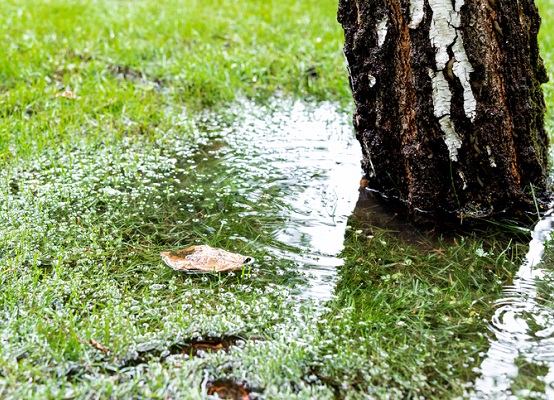
Water flow management in Singapore begins with climatic knowledge. These areas receive over 2,300mm of rain annually. Large monsoon rain bursts overwhelm many drainage systems.
Clay-heavy soils strain tropical drainage. These soils retain water and drain slowly. High humidity prolongs soil moisture, making landscape drying after storms tougher.
Cities make it harder. Pavements impede natural absorption, reducing water drainage. Monsoon planning must account for strong rainfall and space constraints.
Traditional drainage systems from other locations fail here. Wet circumstances aren’t their forte. To avoid outdoor floods and waterlogging, tailor your strategy to these particular conditions.
Local drainage solutions are needed for clay-rich soils and regular rain. Planning is easier when you understand Singapore’s climate and water flow. This understanding is essential for year-round landscape health and function.
Using Quality Materials And Proven Techniques, We Ensure Long-term Protection Against Waterlogging
Solve standing water in garden
Assessing Landscape Drainage
Understanding your land’s inherent inclinations is essential before addressing drainage. Start with basic drainage evaluation to find gathering water and water flow. Regular checks during and after rain reveal issues.
Tests for Drainage Issues
Dig a 30cm-deep hole, fill it with water, then time the draining time for a percolation test. Slow absorption causes clay soil to drain poorly. After rain, look for puddles to find water. Downspouts should guide runoff away from structures to prevent basement flooding.
Map Your Property Water Flow
Map water flow to track runoff. For contour analysis, use a spirit level or smartphone app. Mark water entry and exit on your land. See how landscape slope assessment influences flow. This guides problem-solving.
Soil Types and Drainage
Clay-heavy soil layers hinder drainage in Singapore. Squeeze moist soil into a ribbon to assess permeability. Clay-rich soil keeps form. Jar mix soil drainage tests reveal particle dispersion. Check soil type before repairing since compacted building soils worsen drainage.
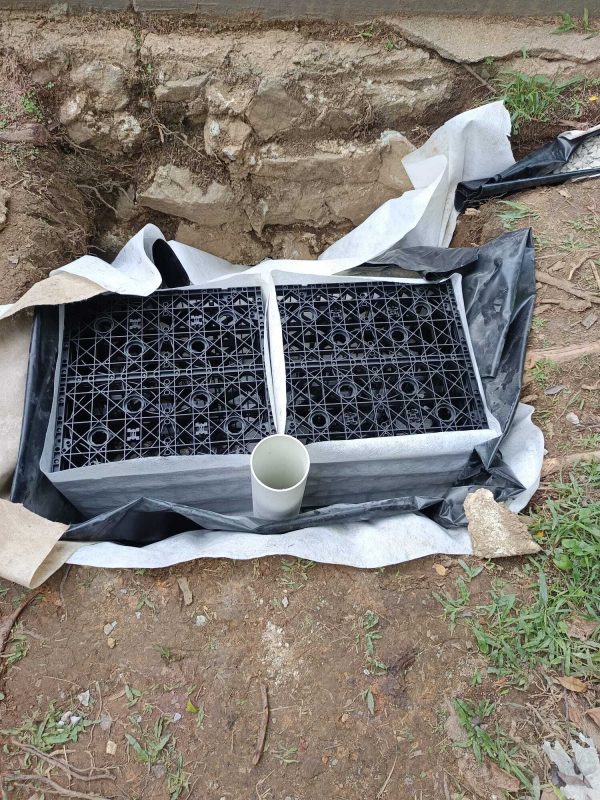
Areas We Serve in Singapore
We install subsoil drainage islandwide. Most of our regular landed-home work concentrates in:
Bukit Timah
Holland Village
Sentosa Cove
Serangoon Gardens
East Coast
Thomson
Tanglin
Sixth Avenue
Marine Parade
Siglap
Katong
Upper Thomson
Yio Chu Kang
Bukit Tinggi
Mount Sinai
Sembawang
Woodlands
Pasir Ris
Punggol
Hougang
Jurong
Telok Kurau
Cluny
Nassim
Why Singapore Property Owners Choose Us for Drainage Work
Drainage Specialists, Not Generalists
Subsoil drainage is technical work. Wrong depth, wrong fall direction, missing geotextile, undersized pipe — each can cause failure. We do this work regularly, not occasionally.
Honest Diagnosis
Not every wet garden needs subsoil drainage. Some need regrading. Some need surface drains. We tell you what’s actually wrong and what will actually fix it — not what gets us the biggest invoice.
Singapore-Specific Design
Our pipe layouts, depths and gravel grades are designed for Singapore’s clay-heavy soils and monsoon rainfall intensity. Generic European or Australian drainage specifications fail here.
2-Year Workmanship Warranty
If our system fails to perform — pipe blocks, discharge stops working — we return at no charge. Most failures are workmanship failures and we own ours.
One Vendor, Multiple Services
Drainage today, re-turfing next week, grass cutting maintenance after. One team, one invoice, one accountability point.
“Our back lawn was unusable for years — squelched underfoot for days after rain, killed every plant we put in. Two previous ‘drainage’ contractors had laid surface trenches that did nothing. Direct Garden diagnosed it as a subsoil problem on the first visit, installed proper HDPE pipes with geotextile wrap, and the lawn has been dry ever since. Two monsoon seasons later and still working perfectly.”
— Mrs Lim, Landed Home Owner, Holland Village
Garden Drainage FAQs
Why does my garden flood after heavy rain in Singapore?
Three main reasons. First, Singapore’s clay-heavy soils drain very slowly — when 30 to 80mm of rain falls in a few hours during monsoon season, the soil cannot absorb the water fast enough. Second, many landed home gardens have poor surface gradients that direct water towards the house rather than away from it. Third, builders often compact the subsoil during construction, eliminating natural drainage pathways. The fix is rarely just surface regrading — most cases need a subsoil pipe system to give trapped groundwater somewhere to go.
What is a subsoil drainage pipe and how does it work?
A subsoil drainage pipe is a perforated HDPE pipe buried 30 to 60 cm below ground level, wrapped in geotextile fabric and bedded in gravel. Water saturating the soil seeps into the gravel, passes through the geotextile (which filters out soil particles), enters the pipe through its perforations, and flows by gravity to a discharge point — typically your existing storm drain or a soakaway. Properly installed, it permanently solves garden ponding because it removes water from the soil itself, not just from the surface.
How is subsoil drainage different from a French drain?
A French drain is one type of subsoil drainage. The classic French drain is a gravel-filled trench with a perforated pipe at the bottom, designed to intercept and redirect groundwater. A full subsoil drainage system can include multiple French drains plus collection chambers, herringbone pipe layouts and discharge connections. For most Singapore landed home gardens, what we install is technically a French drain system — though we tend to use the more general “subsoil drainage” term since it covers everything from a single trench to a full network.
How long does subsoil drainage installation take?
A small residential subsoil drainage installation (10 to 30 metres of pipe) usually takes 2 to 3 working days. Mid-size gardens (30 to 80 metres of pipe with multiple lines) typically take 4 to 6 days. Large estates with full network systems may take 1 to 2 weeks. We work around weather — heavy monsoon rain interrupts trenching since wet trenches collapse and gravel beds wash out before pipe installation.
Will my lawn be ruined during the work?
Trenches need to be excavated and the area above the pipes will be disturbed during installation. However, we minimise the impact: trenches are typically 30 to 40 cm wide, we save the topsoil and turf for reinstatement, and we re-lay the original turf wherever possible. For gardens where the existing lawn is unhealthy anyway, we often recommend pairing the drainage work with full re-turfing using Cow Grass or Pearl Grass — see our grass planting service for details.
What materials do you use for subsoil drainage in Singapore?
We use perforated HDPE (high-density polyethylene) pipes wrapped in non-woven geotextile fabric. HDPE handles Singapore’s humidity, soil chemistry and ground movement far better than older clay or concrete pipes. Geotextile filters out soil while allowing water through, preventing pipe clogging. Bedding gravel is washed crushed stone, typically 20 to 40 mm grade. All materials are SS-standard or equivalent for long-term reliability.
How long does subsoil drainage last?
Properly installed subsoil drainage with HDPE pipes, geotextile wrap and clean gravel bedding lasts 25 to 40 years in Singapore conditions. The most common cause of premature failure is skipping the geotextile fabric — without it, soil particles infiltrate the pipe and clog the perforations within 5 to 10 years. We always wrap, every time, every job.
Do you handle drainage connection to existing storm drains?
Yes. The discharge end of the subsoil pipe needs to connect to your existing storm drainage system — typically a perimeter drain, surface drain or PUB road drain. We design the connection with proper falls (typically 1 in 100 minimum), trap inspection chambers if required, and handle any necessary coordination with PUB for connections to public drainage. Free site visit confirms discharge feasibility before quoting.
Does subsoil drainage need permits in Singapore?
For most landed home installations within your property boundary, no permits are needed for the subsoil pipe itself. However, if the discharge connects to PUB road drains, a PUB application may be required. If the work involves significant excavation near boundary walls or shared drainage, MCST or neighbour consent may be required. We handle all relevant approvals as part of our service.
Can subsoil drainage be installed in an existing landscaped garden?
Yes — most of our installations are retrofits into existing gardens, not new construction. We map the trench routes to minimise disruption to mature plants and feature elements, work around irrigation lines and lighting wherever possible, and reinstate lawn and planting beds after installation. Some plant relocation may be needed if a problem area is heavily landscaped.
Do you provide warranty on subsoil drainage installation?
Yes. We provide a 2-year workmanship warranty on subsoil drainage installations. If the pipe blocks, the discharge fails, or the system stops working due to defective installation, we return at no charge to rectify. The warranty assumes the system is not damaged by subsequent excavation, root intrusion from new trees planted directly over pipes, or other physical damage outside our control.